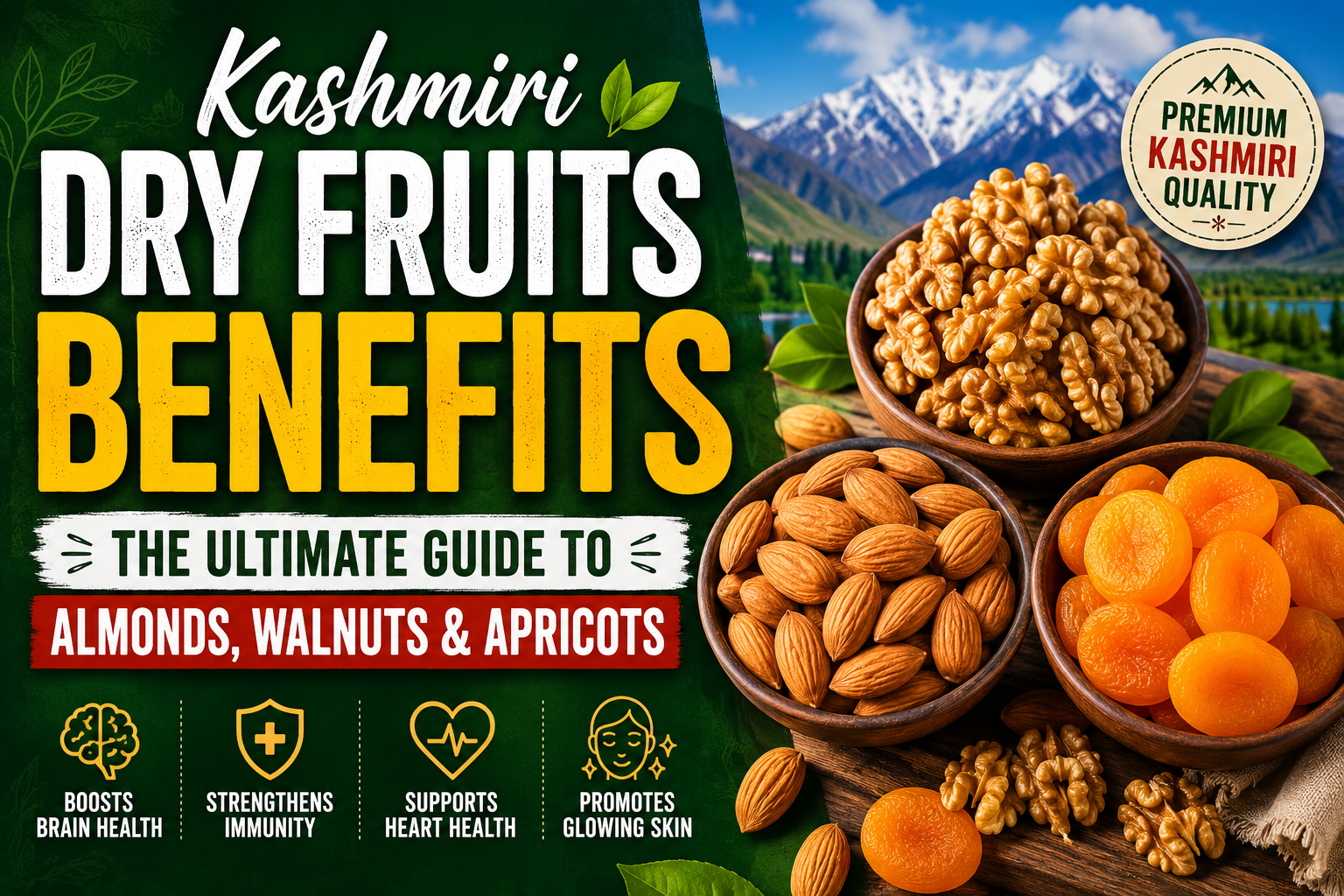
Kashmiri Dry Fruits Benefits: Almonds, Walnuts & Apricots
Kashmiri Dry Fruits Benefits: Almonds, Walnuts & Apricots for Daily Wellness
Kashmiri dry fruits benefits cover daily energy, smooth digestion, heart health, and easy winter nutrition. Almonds, walnuts, and apricots from the valley taste fresh and feel soft in every bite. Their Himalayan roots add to the appeal. Studies show tree nuts can lower LDL cholesterol by 3 to 5 percent with daily small portions. That is one reason families across India keep them on the kitchen shelf all year. A small bowl on the counter often replaces fried snacks and sugary biscuits, which is a quiet win for any busy home. Many nutrition experts recommend small daily portions because nuts and dried fruits provide steady energy, fiber, and important minerals without relying on processed snacks.
For generations, Kashmiri homes have served these nuts at breakfast, in Kahwa tea, and inside winter desserts. The habit has not faded. Many people still pick them today because they taste clean, store well, and slip into any meal. A handful with morning chai or a few pieces in evening yogurt is often enough to feel the change. The same jar feeds breakfast oats, afternoon tea, and late-night dessert without much planning.
Our team visited growers in Shopian, Pulwama, Budgam, and Ladakh to learn how harvest, freshness checks, and sun-drying work in each valley. These trips gave us a clear look at how local farmers protect quality across seasons. We spoke with third-generation orchard owners. We watched the shelling done by hand. We tracked how shade-drying changes apricot colour over a two-week window.
We saw walnuts with paper-thin shells, almonds rich in natural oil, and apricots dried slow to lock in flavour. These old methods keep produce fresh without heavy machines or chemical treatment. The result tastes closer to what families ate fifty years ago. That is exactly why repeat buyers keep coming back to the same growers each season, even when cheaper options sit on supermarket shelves nearby.
Kashmiri Dry Fruits Benefits at a Glance for Winter Nutrition
The advantages of Himalayan nuts and dried fruits shine brightest in winter. People want filling foods that are quick to serve. Most families eat them at breakfast, with tea, in desserts, or as evening snacks. A small bowl on the dining table often replaces processed biscuits. That single swap can cut added sugar by a fair margin over a month. It also trims the urge to reach for fried packaged snacks between meals. These nutritional perks become even more noticeable during winter when people look for warming foods that support energy, digestion, and daily wellness.
These traditional Kashmiri nuts and dried fruits pack vitamins, minerals, fiber, antioxidants, and healthy oils. Together they may aid heart health, digestion, daily energy, immunity, and overall wellness. They store easily and fit into many recipes. From simple porridge to rich festive sweets, the same jar works in many roles. That makes them one of the most flexible foods you can keep at home, and the shelf life beats most fresh produce by weeks.
Heart health support, daily energy, healthy digestion, brain function support, skin and hair support, bone strength support, and immunity support are some of the most recognised Kashmiri dry fruits benefits. These nutrients and healthy fats make almonds, walnuts, and apricots useful for balanced eating habits and simple daily wellness routines throughout the year.Thanks to long tradition and solid nutrition, these Himalayan dry fruits stay popular in homes across India. They keep their place in seasonal diets too. Demand picks up sharply from October through February when cold weather drives people toward warming, nutrient-dense snacks. Wholesale prices often rise by 15 to 20 percent during peak winter months as a result.
Why Kashmiri Dry Fruits Are Special in Traditional Himalayan Diets
The cool Himalayan air, glacier-fed water, and mineral-rich soil shape every crop. Slow growth at high altitude builds deeper flavour. That is why many buyers say the produce feels richer on the palate. Orchards in Shopian sit at 1,600 to 2,200 metres. Cold nights slow ripening. The slow pace concentrates natural sugars and oils in the kernels, which gives each piece more taste per bite than lowland varieties.
Old farming and drying methods are still alive in many valleys. These hand-led ways protect texture, taste, and quality without industrial shortcuts. Farmers spread walnuts on bamboo mats in open courtyards. They turn them by hand twice a day. They finish drying within a tight ten-day window to avoid moisture damage and the off-flavours that come with it.
Most families bring almonds, walnuts, apricots, saffron, and Kahwa to the winter table. These foods are warm, filling, and quick to prepare. They show up at daily meals and large family gatherings alike. Often they pair with fresh bread or close out a heavy lunch. Even small village weddings include a generous spread of mixed nuts as a sign of welcome and care. Their long shelf life and nutrient density also make them useful pantry staples during colder months when fresh produce is not always available in every region.. Their long shelf life and nutrient density also make them useful pantry staples during colder months when fresh produce is not always available in every region.
At Gilaf Foods & Spices, we work with trusted suppliers tied to the traditional growing belts. Customers reach for these nuts and fruits because of the freshness, clean flavour, and natural feel. Every batch is checked for moisture, shell strength, and aroma before it leaves the warehouse. What arrives at your door matches what we saw in the orchard, and that consistency is what keeps subscribers renewing each season.
Traditional Use in Kashmiri Homes
Across Kashmiri kitchens, these foods show up at breakfast, in festive dishes, in winter snacks, and inside desserts. Almonds and walnuts go into Kahwa tea, bakery treats, and milk drinks. A common morning ritual grinds soaked almonds into warm milk with a pinch of cardamom. The drink is filling and warming on a frosty day. Children often grow up on this preparation as their first encounter with nuts. Families serve them at weddings, gatherings, and celebrations too, linking these foods closely with hospitality, winter cooking, and seasonal family meals.
Welcoming a guest with a small plate of mixed nuts is a basic mark of warmth. The gesture has survived even as urban life speeds up. In many homes, a sealed jar of mixed nuts sits ready near the front door for unexpected visitors. Families often pair these foods with Kahwa tea or bakery snacks during winter evenings, which keeps the tradition closely tied to hospitality and seasonal comfort foods. Families often pair these foods with Kahwa tea or bakery snacks during winter evenings, which keeps the tradition closely tied to hospitality and seasonal comfort foods.
Key Nutrients Found in Dry Fruits for Everyday Health
Long use in Kashmiri homes has kept these foods popular for generations. Families lean on them every day because they are practical, easy to store, and quick to prepare through winter. A sealed jar on the counter takes up little space yet covers snacks, breakfast toppings, and dessert ingredients all at once. That is rare for a single pantry item, and it explains why even small kitchens make room for a steady supply.
- Antioxidants help protect cells from stress
- Omega-3 fatty acids support heart and brain health
- Vitamin E supports skin health
- Fiber supports digestion
- Magnesium supports muscles and nerves
- Potassium helps maintain normal blood pressure
- Calcium supports bones and teeth
These nutrients make nuts and dried fruits a smart pick for balanced meals and simple eating routines. Many people pick them over heavily processed snacks too. A 30-gram serving brings more protein and fiber than most packaged options on the shelf. The cost per serving also tends to land lower than premium protein bars, which makes daily use easier on the wallet.
Quick Nutrition Comparison
| Dry Fruit | Key Nutrients | Main Benefits |
|---|---|---|
| Almonds | Vitamin E, Magnesium | Energy and skin support |
| Walnuts | Omega-3, Antioxidants | Cardiovascular and cognitive support |
| Apricots | Fiber, Potassium | Digestion and immunity |
This side-by-side view lays out the strengths of each food in a clear, useful format. Key takeaway: rotate all three through the week to cover a wider range of nutrients rather than leaning on just one. A simple plan might use almonds on weekdays, walnuts in baked treats over the weekend, and apricots as a daily afternoon snack.
Kashmiri Almonds Benefits
Kashmiri almonds carry rich flavour, natural oils, and a fresh aroma. People add them to breakfast, snacks, and winter cooking with ease. Compared to common commercial almonds, the Kashmiri type is slightly smaller but denser in oil. That gives each piece more flavour per bite, and the natural skin tends to hold its colour longer in storage.
Brain and Focus Support
Almonds carry Vitamin E and magnesium. Both link to better focus and memory in published studies. Students and working professionals slot them into morning routines because the habit is easy to keep. Six to eight soaked pieces before study or work is a common pattern. The steady release of energy avoids the mid-morning crash that sugary snacks cause, which matters during long meetings or exam prep.
Daily Wellness Support
The antioxidants inside this nut may aid skin health and broader wellness. They also fill you up. That makes them simple to fit into balanced meals on busy days. A small handful between lunch and dinner can curb the urge to reach for fried snacks. The swap pays off over weeks of steady eating, and many people report better skin clarity within a month or two.
Energy and Bone Support
Protein, fiber, and healthy oils inside these kernels give steady energy through the day. They show up often in winter because they store well and travel without fuss. Magnesium and calcium content also support bone strength. That matters more as people age past their thirties and bone density starts to shift, especially for women approaching menopause.
Many homes soak them overnight because the softer texture is easier to eat at breakfast. Some families also drop them into milk or Kahwa during winter meals. Soaking removes a thin layer of tannins from the skin and may improve nutrient uptake. That is one reason the practice has lasted across generations, and modern nutrition research backs the old habit.
Explore our Kashmiri almonds collection for everyday use and discover how these nutrient-rich nuts can support brain health, boost memory, and provide a steady source of energy throughout your day. Kashmiri almonds are known for their sweet flavor and high vitamin E content, making them a favorite for both snacking and adding to breakfast bowls.
Kashmiri Walnuts Benefits
These walnuts come with thin shells, light kernels, and a fresh taste. They work well in snacks, baked goods, and winter recipes. Local growers grade them into four categories based on kernel colour. The lightest grade fetches premium prices in domestic and export markets alike, sometimes selling at twice the rate of standard grades.
Heart and Brain Support
Walnuts carry omega-3 fatty acids and antioxidants. Both link to cardiovascular and cognitive health. People include them in balanced diets because they pair so easily with breakfast meals and quick snacks. A 28-gram serving covers a meaningful share of daily plant-based omega-3 needs. That is hard to match from any other common nut, which is why nutritionists often single them out.
Winter Food Tradition
Most homes lean on these kernels in winter since they fill you up. They slot into desserts, bakery items, and homemade treats with ease. They are also mixed with honey or saffron in some classic Kashmiri winter recipes. One traditional preparation blends crushed pieces with honey and a few saffron strands into a thick paste. It is served by the spoonful on cold mornings as both a treat and an immunity booster, often given to children before they leave for school.
Browse our Kashmiri walnuts collection for premium-quality walnuts that are packed with omega-3 fatty acids, which are essential for heart health and reducing inflammation. These walnuts have a rich, earthy taste and are often recommended by nutritionists for improving cholesterol levels and supporting overall wellness.
Kashmiri Apricots Benefits
These apricots are soft, mildly sweet, and easy to enjoy as snacks or dessert ingredients. Families also drop them into seasonal fruit mixes and traditional sweet dishes. The Ladakhi variety, often called Halman, is especially prized for its deep orange colour and natural sweetness that needs no added sugar. Local markets sell out of this type within weeks of harvest each year.
Digestion Support
Apricots carry dietary fiber, which may help digestion and gut comfort. People eat them in small portions at breakfast or as evening snacks. Four to five dried pieces cover roughly 10 percent of the daily fiber target for an adult. That makes them a quick win for anyone trying to ease sluggish digestion without supplements or fiber powders.
Daily Nutrition
They also pack potassium and antioxidants that round out daily nutrition. Soft texture and mild sweetness make them simple to slip into regular meals. Chopped into morning oats or blended into smoothies, they add natural sweetness while bringing fiber and minerals that refined sweeteners cannot match. Even a small daily portion adds up over a week of meals.
In Ladakh, many farmers still shade-dry the fruit to protect natural colour and texture during the process. This slow method takes two to three weeks longer than mechanical drying. Yet it produces fruit that holds more vitamin content and a deeper, more complex flavour profile that buyers can taste in the very first bite.
How to Use Dry Fruits Daily
- Add soaked almonds to breakfast oatmeal
- Mix walnuts into yogurt or smoothies
- Add chopped apricots to desserts
- Prepare traditional Kashmiri Kahwa recipe with saffron and nuts
- Use these foods in bakery products and granola
- Carry small portions as evening snacks
These small habits make healthy eating easier on busy days. They also help you fit nuts and dried fruits into meals on a regular basis. No elaborate planning is needed, and no extra grocery runs each week either. A single monthly purchase can cover most of these uses if storage is handled well.
How to Identify Authentic Kashmiri Dry Fruits
- Look for natural aroma and freshness
- Check for light walnut kernels and thin shells
- Choose almonds with natural oil shine
- Select apricots with soft texture and natural colour
- Avoid products with artificial coating or excess shine
Clear packaging and transparent sourcing details also point to genuine quality. Look for batch numbers, harvest dates, and the specific valley or district of origin printed on the label. Reputable sellers rarely hide this information, and the willingness to share traceability is often the clearest sign of an authentic source.
Best Ways to Store Dry Fruits
- Store in airtight containers
- Keep away from moisture and sunlight
- Refrigerate during hot months
- Avoid direct heat exposure
- Use older stock first
Good storage keeps freshness, flavour, and texture for longer stretches. It also cuts moisture exposure, which is the main cause of rancidity in oil-rich nuts like walnuts and almonds. A simple glass jar with a tight lid, kept in a cool kitchen cabinet, often beats fancy plastic containers for long-term quality.
Frequently Asked Questions
Q: What are the main health perks of these valley-grown snacks? This mix, including almonds, walnuts, and apricots, offers a range of benefits such as improved digestion, enhanced immunity, and natural energy. For example, their antioxidants help fight free radicals, while their fiber content supports gut health, making them a smart addition to any diet.
A: The health advantages of these Himalayan nuts include supporting digestion due to their high fiber content, promoting heart health with healthy fats, and providing a natural energy boost from essential vitamins and minerals. For example, a daily handful of Kashmiri almonds or walnuts can help maintain cholesterol levels and improve overall wellness, especially during colder months.
Q: Which dry fruits are commonly used for brain health? Walnuts and almonds from Kashmir are especially valued for supporting cognitive function due to their high omega-3 fatty acids and vitamin E content. Studies suggest that regular consumption of these nutritious snacks may help improve memory, focus, and overall brain performance. Including them in your daily diet is one of the main reasons people choose these valley-sourced foods for mental sharpness and long-term neurological wellness.
A: Walnuts and almonds, particularly those sourced from Kashmir, are known for their positive impact on brain health. They contain omega-3 fatty acids and Vitamin E, which research suggests may support memory and cognitive function. Nutritionists often recommend including these nuts in a balanced diet to help protect against age-related decline and support mental clarity.
Q: Are apricots good for digestion? Absolutely. Kashmiri apricots are rich in soluble and insoluble dietary fiber, which helps regulate bowel movements and supports a healthy gut microbiome. The natural enzymes and antioxidants found in these apricots can also soothe the digestive tract, making them a gentle choice for people with sensitive stomachs or those seeking to improve their digestive health naturally.
A: Yes. Apricots carry dietary fiber that may help digestion. In addition, Kashmiri apricots contain potassium and antioxidants that can reduce inflammation in the digestive system. Their fiber content not only promotes regularity but also aids in nutrient absorption, making them a smart snack for anyone looking to support gut health and enjoy the unique Kashmiri apricots benefits.
Q: Why are Kashmiri walnuts popular?
Kashmiri walnuts are popular because they are known for their rich taste, high oil content, and soft texture, making them a favorite among dry fruit lovers. Grown in the cool climate of Kashmir, these walnuts are packed with omega-3 fatty acids, which support heart health and brain function. Many people choose Kashmiri walnuts for their natural, chemical-free cultivation and the unique flavor that sets them apart from other varieties. Their popularity is also boosted by the fact that they are often recommended for daily wellness and are a key part of the region's prized produce.
To keep Kashmiri almonds, walnuts, and apricots fresh and flavorful, store them in airtight containers away from direct sunlight and moisture. Ideally, place them in a cool, dry place or refrigerate them to extend their shelf life and prevent spoilage. For example, walnuts can turn rancid if exposed to heat, so refrigeration is especially helpful. Proper storage not only preserves their taste and texture but also ensures you continue to enjoy the full range of Kashmiri dry fruits benefits without loss of nutrients or quality.
Kashmiri walnuts are highly sought after for their unique taste, high oil content, and soft texture, making them a favorite among dry fruit lovers. Grown in the pristine Himalayan climate, these walnuts are rich in omega-3 fatty acids, antioxidants, and essential minerals. Many nutritionists recommend them for supporting brain health and reducing inflammation, which highlights the broader Kashmiri walnuts benefits for daily wellness.
To preserve freshness and maximize the nutritional value of Kashmiri dry fruits, always store them in airtight containers, away from moisture, sunlight, and direct heat sources. This prevents spoilage and keeps their natural oils intact. For longer shelf life, especially in humid climates, refrigeration is recommended. Proper storage ensures you continue to enjoy the full Kashmiri dry fruits benefits without loss of flavor or nutrients.
A: Keep them in airtight containers away from moisture and direct heat. For example, glass jars with tight lids or food-grade plastic boxes work well. Storing them in a cool, dark place helps maintain their texture and prevents rancidity. If you buy in bulk, consider dividing them into smaller portions to avoid frequent exposure to air. This method is especially useful for preserving the delicate flavors of Kashmiri almonds, walnuts, and apricots.
A: Many people pick them for the thin shells, light kernels, and fresh flavour. In addition, Kashmiri walnuts are valued for their high omega-3 fatty acid content, which supports brain health and reduces inflammation. Their unique taste comes from the mineral-rich Himalayan soil, making them a favorite in both traditional Kashmiri recipes and modern healthy diets. These benefits highlight why Kashmiri walnuts are a staple among dry fruits.
Q: How should these foods be stored?
Related Guides and Collections
- Explore our winter wellness collection
- Discover premium Kashmiri almonds
- Browse authentic Kashmiri walnuts
- Read our Kashmiri Kahwa recipe guide
Conclusion
The nutritional value of Kashmiri produce wraps up into practical nutrition, steady energy, and traditional winter nourishment. Almonds, walnuts, and apricots from the valley stay popular because they are versatile, full of flavour, and easy to include in daily meals.