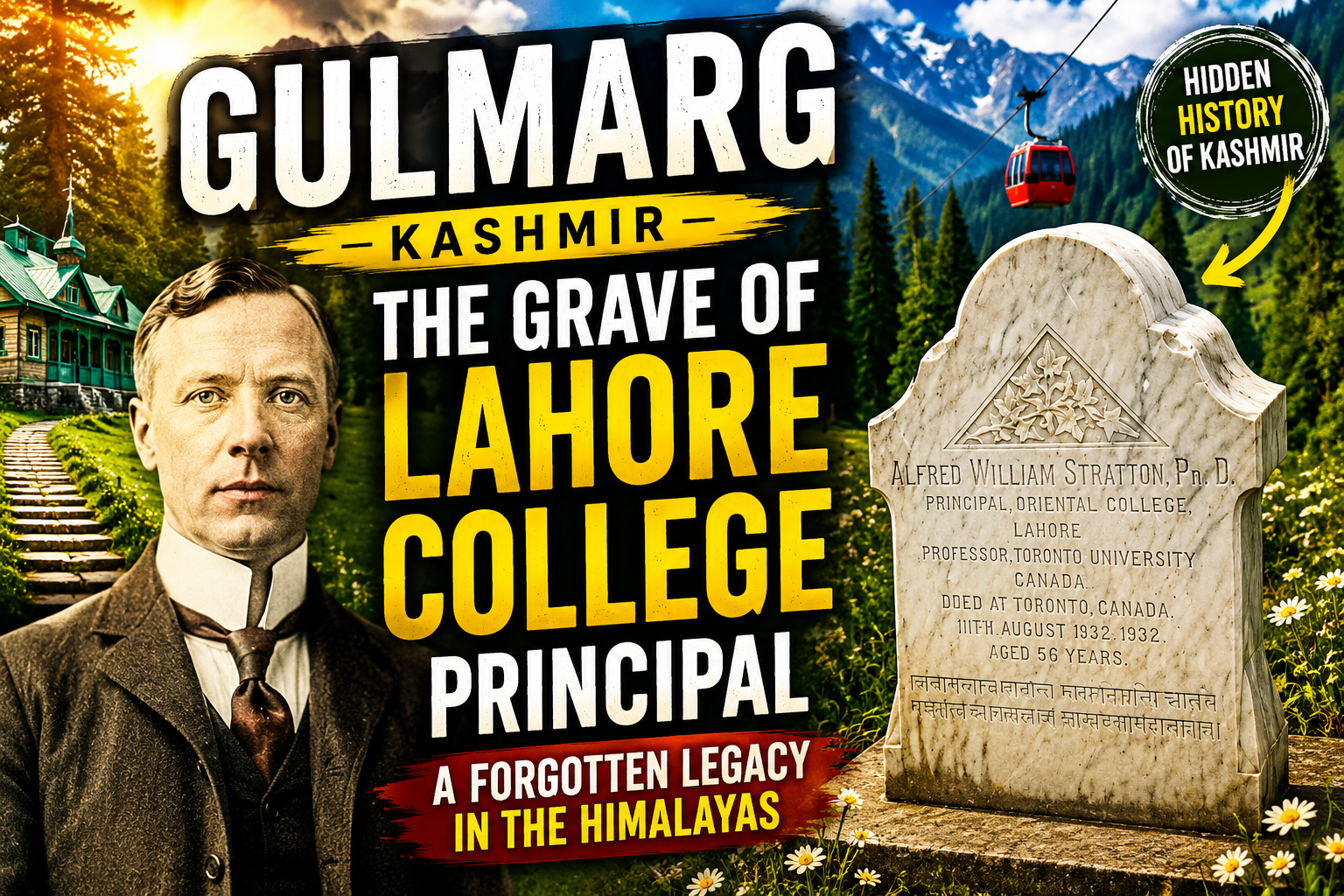
From Lahore to Gulmarg: The Forgotten Grave of Alfred William Stratton
Alfred William Stratton: From Lahore, Pakistan to Gulmarg, Kashmir, The Forgotten Grave of a Canadian Scholar
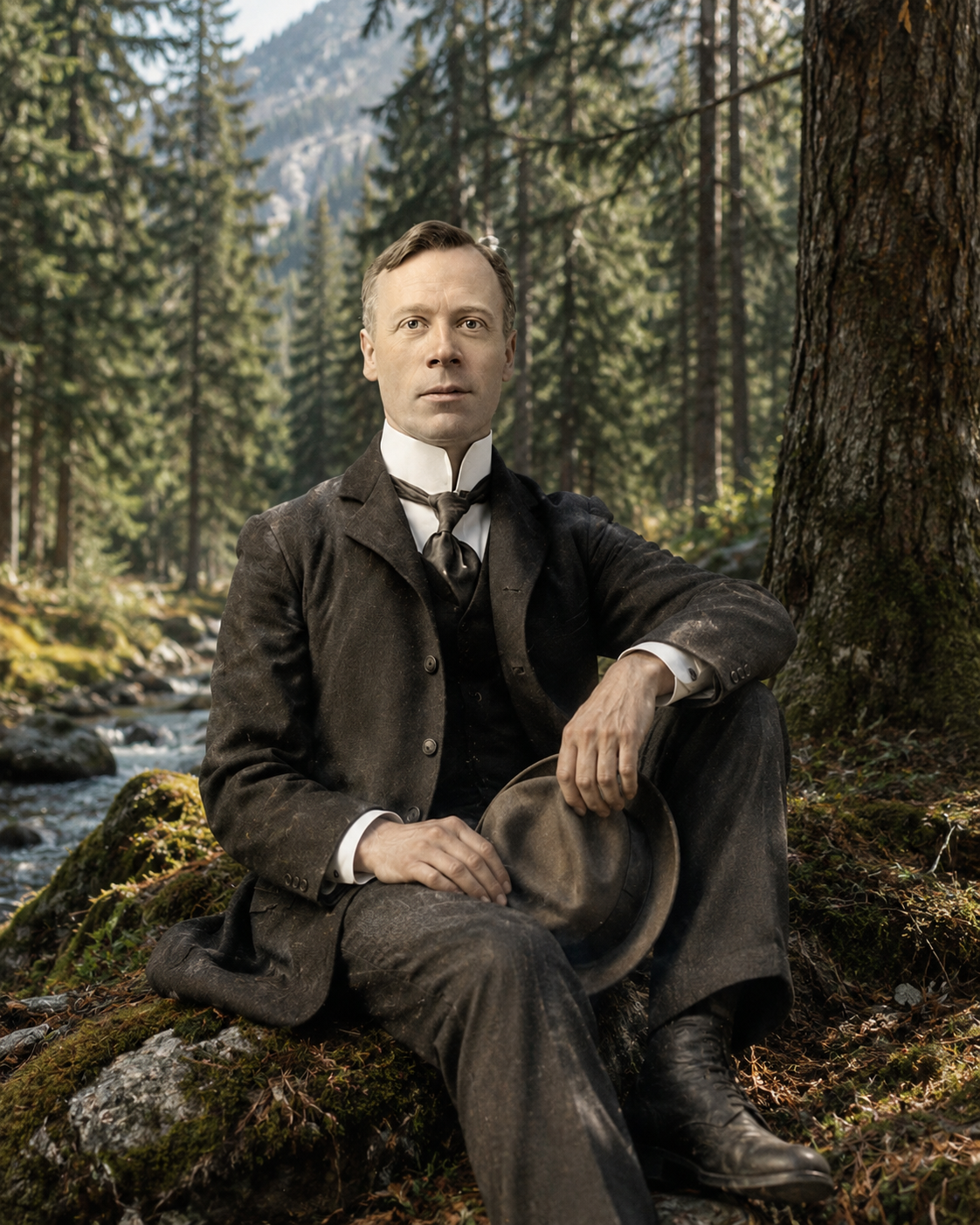 Nestled among the pine-covered hills of Gulmarg, Kashmir, lies a forgotten grave that quietly tells a remarkable story spanning three regions of the world, Canada, Lahore, and Kashmir. While thousands of tourists visit Gulmarg every year for its breathtaking landscapes, skiing slopes, and meadows, very few know about the resting place of Alfred William Stratton, a Canadian scholar whose life journey connected continents, cultures, and institutions during the British colonial era.
For many visitors, the grave appears to be just another old tombstone in a historic cemetery. However, a closer look reveals an intriguing chapter of history that has largely faded from public memory. The inscription on the gravestone identifies the individual as Alfred William Stratton, a scholar associated with Oriental College, Lahore, and Toronto University, Canada. This discovery raises an obvious question: How did a Canadian academic become connected to Lahore, and why is his grave located in Gulmarg, Kashmir?
Nestled among the pine-covered hills of Gulmarg, Kashmir, lies a forgotten grave that quietly tells a remarkable story spanning three regions of the world, Canada, Lahore, and Kashmir. While thousands of tourists visit Gulmarg every year for its breathtaking landscapes, skiing slopes, and meadows, very few know about the resting place of Alfred William Stratton, a Canadian scholar whose life journey connected continents, cultures, and institutions during the British colonial era.
For many visitors, the grave appears to be just another old tombstone in a historic cemetery. However, a closer look reveals an intriguing chapter of history that has largely faded from public memory. The inscription on the gravestone identifies the individual as Alfred William Stratton, a scholar associated with Oriental College, Lahore, and Toronto University, Canada. This discovery raises an obvious question: How did a Canadian academic become connected to Lahore, and why is his grave located in Gulmarg, Kashmir?
Who Was Alfred William Stratton?
Alfred William Stratton was a Canadian scholar and academic who lived during a period when educational and intellectual exchanges between Europe, North America, and the Indian subcontinent were becoming increasingly common. Historical references associated with his gravestone indicate that he served as Principal of Oriental College, Lahore, one of the most respected educational institutions in the region. Founded in the nineteenth century, Oriental College played a significant role in the preservation and promotion of Eastern languages, literature, and culture. The institution attracted scholars from different parts of the world who were interested in studying and teaching classical languages, philosophy, history, and religious texts. Stratton's association with the college suggests that he was deeply involved in academic life and contributed to the intellectual environment of Lahore during a transformative period in South Asian history.Lahore: A Center of Learning
Today, Lahore is widely known as one of South Asia's great cultural capitals. During the colonial period, it was also an important educational center. Institutions such as Government College, Punjab University, and Oriental College attracted students and scholars from across the region. For a Canadian academic like Alfred William Stratton, Lahore represented an opportunity to engage with rich intellectual traditions and contribute to the growing educational landscape of the time. Scholars working in Lahore often participated in research involving languages, literature, archaeology, religion, and cultural studies. The presence of foreign academics in colonial India was not unusual, but each individual brought unique experiences and perspectives. Stratton's journey from Canada to Lahore reflects the global nature of academic exchange even more than a century ago.The Connection to Canada
One of the most fascinating aspects of Stratton's story is his Canadian background. The inscription on his grave references Toronto University, linking him directly to one of Canada's most respected educational institutions. This connection highlights how education served as a bridge between distant parts of the world. Long before modern air travel and digital communication, scholars traveled thousands of kilometers to teach, research, and share knowledge. For many visitors who encounter the grave today, the Canadian connection comes as a surprise. It serves as a reminder that the history of Kashmir and the wider Indian subcontinent is intertwined with stories from many nations.Why Was He in Kashmir?
During the late nineteenth and early twentieth centuries, Kashmir was a popular destination for administrators, missionaries, scholars, and travelers seeking relief from the intense summer heat of the plains. Gulmarg, in particular, was known for its cool climate, scenic beauty, and peaceful environment. The hill station attracted visitors from across British India and beyond. Many Europeans spent their summers in Kashmir, taking advantage of the pleasant weather and natural surroundings. It is believed that Alfred William Stratton was in Kashmir during this period and eventually passed away there. His burial in Gulmarg reflects the historical importance of the region as a seasonal retreat and meeting point for people from different backgrounds.Discovering the Forgotten Grave
For decades, the grave remained largely unnoticed by the wider public. Hidden among other historical tombstones, it attracted only occasional attention from local historians, heritage enthusiasts, and curious visitors. In recent years, however, social media has played an important role in bringing forgotten historical sites back into public awareness. Photographs and videos of the gravestone have circulated online, sparking interest among people in India, Pakistan, Canada, and other parts of the world. Many viewers are surprised to learn that a Canadian scholar connected to Lahore is buried in Gulmarg. The story naturally inspires curiosity because it combines elements of history, education, travel, and cultural exchange.A Symbol of Shared History
The grave of Alfred William Stratton is more than a personal memorial. It also represents a shared historical connection between regions that are today separated by international borders. His life story links: * Canada, where he pursued academic work. * Lahore, where he contributed to higher education. * Kashmir, where he spent his final days. These connections remind us that history often transcends modern political boundaries. The movement of scholars, teachers, writers, and researchers has long contributed to the exchange of ideas across cultures. In an era when global connectivity is taken for granted, Stratton's story highlights the extraordinary journeys undertaken by individuals more than a century ago.The Importance of Preserving Historical Sites
Many historic cemeteries across South Asia contain valuable information about people who shaped local communities, educational institutions, and cultural life. Unfortunately, numerous graves and monuments have deteriorated due to age, weather, and lack of preservation. The grave of Alfred William Stratton serves as an example of why historical preservation matters. Even a single gravestone can reveal important details about educational history, international connections, and the lives of individuals who contributed to society. By documenting and protecting such sites, future generations can better understand the complex and interconnected history of the region.What Visitors Can Learn
Visitors who encounter the grave often find themselves reflecting on how interconnected the world has always been. Long before globalization became a common term, people traveled vast distances in pursuit of education, research, and opportunity. The story also demonstrates the enduring value of curiosity. A simple inscription on a gravestone can lead to questions about history, culture, geography, and human experience. For travelers exploring Gulmarg, discovering this forgotten grave offers a different perspective on the destination. Beyond its famous landscapes and tourist attractions lies a rich historical legacy waiting to be explored.A Forgotten Legacy Remembered
Today, Alfred William Stratton's grave stands quietly in Gulmarg as a witness to a remarkable life journey. Though many details of his personal story may remain unknown, the surviving inscription provides enough information to inspire interest and investigation. His connection to Canada, Lahore, and Kashmir makes his grave one of the most intriguing historical sites in the region. It represents not only the life of a scholar but also the broader story of education, cultural exchange, and international connection during a pivotal period in history. As more people learn about this forgotten grave, Alfred William Stratton's legacy continues to live on. What was once an overlooked monument has become a symbol of the enduring links between distant places and diverse communities. The next time you visit Gulmarg, take a moment to look beyond the mountains and meadows. Hidden among the historic graves is the story of a Canadian scholar whose journey connected Canada, Lahore, and Kashmir, a story that deserves to be remembered.Shop Products From This Article


Frequently Asked Questions
Who was Alfred William Stratton?
Alfred William Stratton was a Canadian scholar and academic who served as Principal of Oriental College, Lahore. He was associated with higher education and scholarly work during the colonial era and is remembered today through his historic grave in Gulmarg, Kashmir.
Where is Alfred William Stratton buried?
Alfred William Stratton is buried in Gulmarg, Kashmir. His grave is located in one of the historic cemeteries of Gulmarg and has attracted attention from historians, travelers, and heritage enthusiasts.
Why is a Canadian scholar buried in Gulmarg, Kashmir?
During the colonial period, Gulmarg was a popular hill station visited by scholars, administrators, and travelers. Alfred William Stratton is believed to have been in Kashmir when he passed away, leading to his burial in Gulmarg.
What was Alfred William Stratton's connection to Lahore?
Alfred William Stratton served as Principal of Oriental College, Lahore, one of the most respected educational institutions of its time. His work contributed to the academic and intellectual development of the region.
Why is Alfred William Stratton's grave historically significant?
The grave of Alfred William Stratton represents a unique historical connection between Canada, Lahore, and Kashmir. It highlights the international exchange of scholars and ideas during the colonial era and serves as a reminder of the region's rich educational history.