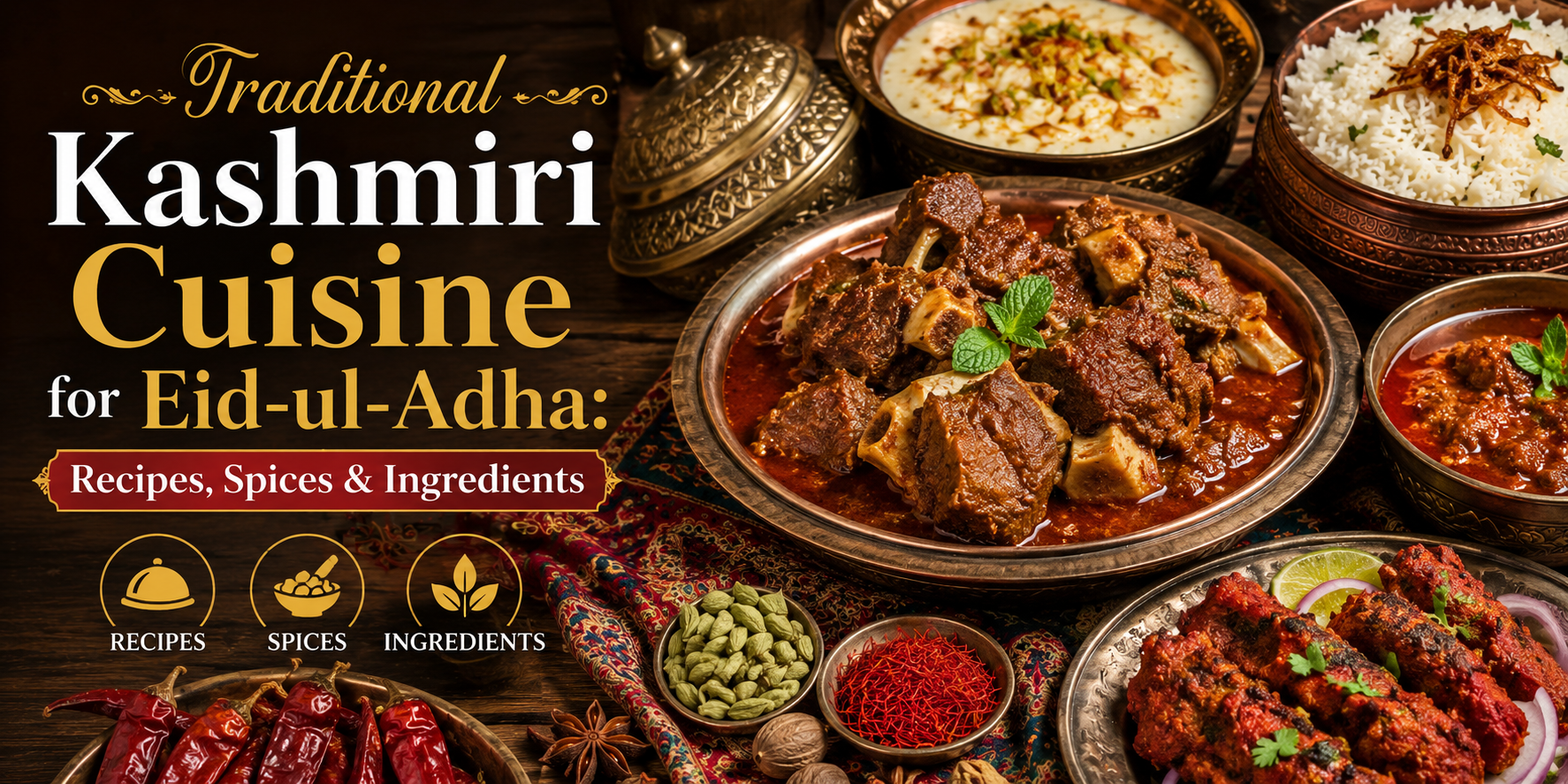
Kashmiri Cuisine for Eid-ul-Adha: Traditional Recipes, Spices & Ingredients
Kashmiri cuisine for Eid-ul-Adha reflects centuries of Wazwan cooking traditions, family gatherings, and festive food culture across the Kashmir Valley. During Eid-ul-Adha, families prepare Rogan Josh, Yakhni, Rista, Gushtaba, Tabak Maaz, and Kashmiri Kahwa using authentic spices, slow-cooking techniques, and locally sourced ingredients. These traditional Eid dishes combine saffron from Pampore, Kashmiri red chili powder, fennel, dry ginger, cardamom, and cinnamon to create rich aroma, deep flavor, and natural color.
Eid-ul-Adha in Kashmir is not only a religious celebration but also a major cultural tradition centered around hospitality and food. After Eid prayers and Qurbani, families welcome relatives, neighbors, and guests with elaborate Wazwan feasts served on traditional copper traems. In many homes, Kahwa is prepared throughout the day in copper samovars and served with almonds, walnuts, and Sheermal bread.
At Gilaf Store, our culinary team has worked directly with Pampore saffron growers and Srinagar spice sellers since 2018. We tested these traditional Kashmiri Eid recipes in home-style kitchens using copper cookware, small-batch spices, and authentic Wazwan cooking methods to preserve the original taste loved across Kashmir.
During Eid gatherings in Srinagar, many families begin preparing Wazwan dishes early in the morning because slow cooking is considered essential for authentic flavor. Older family members often supervise spice preparation while younger relatives help serve guests throughout the celebration.
Kashmiri Cuisine and Eid-ul-Adha Traditions
Eid-ul-Adha in Kashmir begins with congregational prayers at mosques and shrines such as Hazratbal and Jamia Masjid. Families then perform Qurbani and distribute meat among relatives, neighbors, and people in need. This practice reflects generosity, unity, and compassion, which remain central values during Eid celebrations throughout the Kashmir Valley.
Food plays an important role during Eid because Kashmiri families prepare large Wazwan feasts for guests and relatives. Popular dishes include Kashmiri Rogan Josh, Yakhni, Gushtaba, Rista, Tabak Maaz, and Kashmiri Pulao. Many homes also prepare Noon Chai, Kahwa, Sheermal, Modur Pulao, and traditional desserts using saffron, almonds, walnuts, and local honey.
In many Kashmiri households, meals are served on a traditional traem, a large copper platter used for communal dining. This style of dining strengthens family bonds and reflects Kashmiri hospitality. During large Eid gatherings, experienced Wazas prepare each dish slowly because gentle cooking improves texture and allows spices to blend naturally into the meat.
Traditional Kashmiri Dishes for Eid-ul-Adha
Traditional Kashmiri cuisine for Eid-ul-Adha comes from the famous Wazwan feast, which represents the heart of Kashmiri food traditions. Wazwan dishes are known for balanced spices, tender meat, fragrant gravies, and slow cooking methods that preserve flavor naturally. Unlike very spicy curries, Kashmiri recipes focus more on aroma, warmth, and depth.
Popular Kashmiri Eid recipes include Rogan Josh, Yakhni, Gushtaba, Rista, and Tabak Maaz. These dishes are prepared using yogurt, saffron, fennel powder, dry ginger, Kashmiri chili powder, and whole spices. Many Wazas still prefer copper cookware because it distributes heat evenly and improves the texture of slow-cooked gravies.
In older Kashmiri households, Wazwan dishes are often prepared several hours before guests arrive because resting the curry improves flavor naturally. Many Wazas believe Rogan Josh tastes even better after the spices settle slowly into the meat overnight. For this reason, traditional Eid feasts are usually planned carefully one day before celebrations begin.
Kashmiri Rogan Josh Recipe
Kashmiri Rogan Josh is one of the most popular dishes prepared during Eid-ul-Adha celebrations in Kashmir. The curry is known for its rich red color, tender mutton, and fragrant gravy made with Kashmiri spices. Traditional Rogan Josh uses mild Kashmiri chili powder to create deep color without making the dish extremely spicy.
Many Kashmiri cooks prepare Rogan Josh over low heat because slow cooking allows yogurt, saffron, fennel, and cardamom to blend naturally with the meat. During large Eid feasts, Wazas often use copper pots because they help the gravy cook evenly while keeping the meat soft and flavorful.
Ingredients for Kashmiri Rogan Josh (Serves 4, 6)
Fresh ingredients are important for preparing authentic Kashmiri Rogan Josh. Bone-in mutton improves flavor naturally, while freshly ground fennel and dry ginger create the classic taste associated with Kashmiri Eid recipes. Many families also use mustard oil because it adds warmth and depth to the curry.
In many Kashmiri homes, Rogan Josh is cooked slowly for family Eid lunches and evening gatherings. Experienced Wazas often recommend using bone-in mutton because it improves the richness of the gravy naturally during long cooking sessions.
- 1 kg mutton, bone-in pieces
- 3 tbsp Kashmiri red chili powder
- 2 tbsp fennel powder
- 1 tbsp dry ginger powder
- 1 cup thick yogurt
- 4 green cardamoms
- 2 black cardamoms
- 4 cloves
- 1 cinnamon stick
- 4 tbsp mustard oil
- Salt to taste
How to Prepare Kashmiri Rogan Josh
Traditional Kashmiri cuisine depends heavily on slow cooking because gentle simmering allows spices to release their aroma gradually. Many Wazas avoid high heat while preparing Rogan Josh because excessive heat can harden the meat and reduce the flavor of saffron, yogurt, and fennel.
As a result, many Wazwan dishes develop deeper flavor when they rest for several hours before serving. For this reason, traditional Kashmiri cooks usually prepare spice blends fresh before Eid gatherings begin.
- Heat mustard oil until lightly smoking.
- Add cardamom, cloves, and cinnamon.
- Sear the mutton until lightly browned.
- Add whisked yogurt slowly while stirring continuously.
- Mix in Kashmiri chili powder, fennel powder, and dry ginger powder.
- Cover and cook on low heat for about 90 minutes.
- Simmer uncovered until the gravy thickens naturally.
- Serve hot with steamed rice or Kashmiri bread.
Kashmiri Yakhni Recipe
Kashmiri Yakhni is a yogurt-based mutton curry known for its smooth texture, delicate flavor, and rich aroma. Unlike spicy curries, Yakhni focuses on balance created through saffron, fennel powder, dry mint, and cardamom. This dish is commonly served during Eid because it pairs perfectly with heavier Wazwan recipes.
In many Kashmiri homes, Yakhni is cooked slowly to keep the yogurt gravy smooth and creamy. Traditional cooks avoid high heat because gentle simmering helps the spices blend naturally without curdling the yogurt. The final dish develops soft texture and comforting flavor.
Ingredients for Kashmiri Yakhni (Serves 4)
High-quality yogurt and fresh Kashmiri spices improve the flavor of Yakhni significantly. Many families use saffron from Pampore because it gives the dish its light golden color and warm aroma. Fresh fennel powder also adds sweetness and balance to the gravy.
Traditional Kashmiri Yakhni depends heavily on yogurt quality and slow simmering. Many families avoid high heat while preparing Yakhni because gentle cooking helps maintain the creamy texture and delicate aroma associated with authentic Kashmiri cuisine.
- 800 g mutton pieces
- 2 cups thick yogurt
- 2 tbsp fennel powder
- 1 tbsp dry mint
- 1 tsp dry ginger powder
- 3 green cardamoms
- Kashmiri saffron soaked in warm milk
- 2 tbsp ghee
- Salt to taste
Preparation Method
Kashmiri Yakhni tastes best when cooked slowly over low heat. Many Wazas recommend stirring the yogurt continuously while adding spices because this keeps the gravy creamy and smooth. Slow simmering also helps saffron and fennel release their natural aroma into the curry.
Simmer the mutton with salt and cardamom until tender. Heat ghee in another pot and lightly sauté the cooked meat. Add whisked yogurt slowly over low heat while stirring continuously. Mix in fennel powder, saffron milk, dry mint, and dry ginger powder. Continue simmering until the gravy becomes smooth and aromatic. Serve hot with steamed basmati rice.
Kashmiri Kahwa for Eid-ul-Adha
Kashmiri Kahwa is a traditional green tea drink served during Eid-ul-Adha celebrations across Kashmir. The tea combines saffron, almonds, cinnamon, cardamom, and honey to create a warm drink with rich aroma and refreshing flavor. Kahwa remains an important part of Kashmiri tea culture and hospitality.
Many families prepare Kahwa several times during Eid gatherings because the tea refreshes guests after heavy Wazwan meals. In traditional Kashmiri homes, Kahwa is often brewed in copper samovars because slow brewing improves aroma and keeps the tea warm for long periods.
Ingredients for Kashmiri Kahwa (4 Cups)
Fresh ingredients improve the flavor of Kashmiri Kahwa naturally. Green tea leaves, saffron, cinnamon, almonds, and local honey create warmth and aroma that make the tea popular during Eid celebrations across the Kashmir Valley.
Kahwa preparation varies slightly across Kashmir. Some families add crushed almonds and saffron directly into the samovar, while others serve almonds separately during Eid gatherings and traditional Wazwan meals.
- 4 cups water
- 2 tsp Kashmiri green tea
- 10, 12 saffron strands
- 1 cinnamon stick
- 4 green cardamoms
- 8, 10 sliced almonds
- Honey or sugar to taste
How to Prepare Kahwa
Traditional Kashmiri Kahwa is prepared slowly to keep the aroma of saffron and green tea fresh. Many Kashmiri families avoid boiling the tea too strongly because high heat can reduce flavor and create bitterness during brewing.
Boil water with cinnamon and cardamom for several minutes. Reduce the heat and add green tea leaves along with saffron strands. Allow the tea to steep gently before straining. Garnish with sliced almonds and sweeten lightly with Kashmiri honey. Serve warm after meals during Eid-ul-Adha celebrations.
More Traditional Kashmiri Eid Dishes
Apart from Rogan Josh and Yakhni, traditional Wazwan feasts during Eid-ul-Adha also include Rista, Gushtaba, Tabak Maaz, Kashmiri Pulao, and Sheermal. These dishes remain important parts of Eid-ul-Adha customs in Kashmir because they reflect hospitality, celebration, and traditional cooking heritage.
Many Kashmiri families also prepare Noon Chai during morning gatherings before large Eid meals begin. The pink salted tea is commonly served with Sheermal bread and dry fruits during festive family visits across the Kashmir Valley.
Best Kashmiri Spices for Eid Recipes
Kashmiri spices are essential for preparing traditional Eid recipes with authentic flavor, color, and aroma. Kashmiri saffron, fennel powder, dry ginger, cardamom, cloves, cinnamon, and Kashmiri red chili powder form the foundation of Kashmiri cuisine for Eid-ul-Adha.
Freshly ground spices retain natural oils and improve the taste of Rogan Josh, Yakhni, Gushtaba, and Kahwa significantly. Many Kashmiri cooks prefer buying spices in small batches from Srinagar spice markets because fresher spices create stronger aroma and better cooking results.
Proper storage is also important because heat and moisture can reduce spice quality quickly. Many Kashmiri families store saffron, fennel, and dry ginger in airtight containers away from direct sunlight to preserve freshness throughout Eid-ul-Adha cooking.
Frequently Asked Questions About Kashmiri Cuisine for Eid-ul-Adha
What are the most popular Kashmiri Eid dishes?
Popular Kashmiri Eid recipes include Rogan Josh, Yakhni, Gushtaba, Rista, and Tabak Maaz. These dishes are commonly served during family gatherings and Wazwan feasts across Kashmir.
Why is Kashmiri saffron considered premium?
Kashmiri saffron from Pampore is known for its deep color, rich aroma, and strong flavor. Even a small amount improves the aroma and appearance of Kahwa, desserts, and traditional Kashmiri cuisine.
What spices are used in traditional Kashmiri cuisine?
Traditional Kashmiri cuisine commonly uses saffron, fennel powder, dry ginger, Kashmiri red chili powder, cardamom, cloves, and cinnamon. These spices create balanced flavor without excessive heat.
What is special about Kashmiri Kahwa?
Kashmiri Kahwa is a saffron-infused green tea prepared with almonds, cinnamon, cardamom, and honey. The tea is traditionally served during Eid gatherings and reflects Kashmiri hospitality.
How does Wazwan reflect Kashmiri culture?
Wazwan reflects Kashmiri food traditions, hospitality, and community dining. The multi-course feast is carefully prepared by Kashmiri Wazas during weddings and Eid celebrations throughout the Kashmir Valley.
Explore More Kashmiri Products and Recipes
Learn more about traditional Kashmiri ingredients and Eid recipes through our detailed guides below.
According to the Government of India GI Registry, Kashmiri saffron from Pampore is officially recognized for its geographical authenticity and premium quality.
Learn more about Kashmir Saffron GI Information, Wazwan cuisine, and Eid-ul-Adha traditions.
Conclusion
Kashmiri cuisine for Eid-ul-Adha combines rich food traditions, family gatherings, and authentic Wazwan recipes that continue to bring people together across Kashmir. From Rogan Josh and Yakhni to Kahwa and Gushtaba, these dishes preserve the flavor and hospitality associated with Kashmiri culture.
Many families consider Kashmiri cuisine for Eid-ul-Adha an important way to preserve regional food traditions and pass traditional recipes to younger generations. Using high-quality saffron, fresh spices, natural honey, and traditional cooking methods improves flavor, aroma, and authenticity naturally.
Traditional Kashmiri cuisine remains one of the most celebrated parts of Eid-ul-Adha gatherings in Kashmir because it combines hospitality, culture, and slow-cooked Wazwan dishes that continue to define Kashmiri food heritage today.